
7 Best Small Business Credit Cards: Rewards, 0% APR & EIN Approval Guide
Selecting the best small business credit cards puts thousands of dollars back onto your bottom line through automated cash back, transferable travel points, and interest-free equipment financing—while picking the wrong card drains profit through uncollected fees or high revolving APR. Below is an updated ranking of seven top business cards across every company stage—from sole proprietors launching with zero business credit and LLCs applying with an EIN to high-spend operators and funded startups—paired with exact approval criteria and break-even math.


Try our free Profit Margin Calculator to calculate your net cash back and business card interest impact.
1. How to evaluate small business credit cards before applying
Choosing the right small business credit card requires balancing three variables simultaneously: net rewards structure (flat cash back vs. bonus-category points), financing costs (12-month 0% intro APR vs. pay-in-full charge rules), and credit underwriting thresholds (personal guarantee vs. cash-balance qualification).
Before submitting an application, classify how your company actually uses credit. If you pay every monthly statement in full, regular APR rates become irrelevant and maximizing flat cash back, welcome bonuses, or employee spend controls wins. Conversely, if you plan to stretch an inventory purchase, website build, or commercial equipment order across multiple quarters, prioritizing a 12-month 0% intro purchase APR matters far more than chasing an extra half-percent of rewards.
- Rewards fit: match flat 1.5%–2% cards to mixed vendor bills, or category cards to heavy shipping, ad spend, and travel.
- APR & payoff discipline: never treat a 17%–29% variable-rate credit card as multi-year growth capital.
- Underwriting tier: align the card to your actual stage—sole proprietors, established LLCs, fair-credit rebuilders, or funded startups.
- Tax cleanliness: routing 100% of deductible vendor charges through one dedicated business card eliminates messy personal bank sorting.
2. Chase Ink Business Unlimited (#1 Best Overall) and Chase Ink Business Preferred (#3 Best for Travel)
1. Chase Ink Business Unlimited (Best Overall): For most small companies, Chase Ink Business Unlimited remains the default all-around starting card thanks to a $0 annual fee, unlimited flat 1.5% cash back on every purchase, a generous $750 welcome bonus (awarded as 75,000 Ultimate Rewards points after spending $6,000 within the first 3 months), and a 12-month 0% introductory APR on new purchases.
Why It Scales With Your Business: Even though Chase markets the card as simple cash back, the points accrue as Chase Ultimate Rewards. If you later add an annual-fee travel card like Ink Business Preferred or Chase Sapphire Preferred, you can combine points and unlock airline or hotel partner transfers rather than cashing out at 1 cent per point.
3. Chase Ink Business Preferred (Best for Travel & Digital Ads): Companies spending heavily on online marketing and shipping get unmatched leverage from Chase Ink Business Preferred ($95 annual fee). It earns 100,000 bonus points after spending $8,000 in the first 3 months and delivers 3x points on the first $150,000 spent in combined annual purchases across travel, shipping expenses, internet/cable/phone services, and advertising purchases made with social media sites and search engines (1x thereafter). Points redeem at 1.25 cents each through Chase Travel or transfer to airline and hotel partners—just verify updated partner ratios before transferring, as select partner conversions (such as World of Hyatt) have shifted from 1:1 to adjusted ratios.
- Ink Business Unlimited: $0 annual fee, 1.5% unlimited back, $750 bonus ($6k spend/3 mos), 12 months 0% intro APR on purchases.
- Ink Business Preferred: $95 annual fee, 100,000-point bonus ($8k spend/3 mos), 3x on ads, shipping, telecom, and travel (up to $150k/yr).
- No standard intro 0% APR on Preferred: carry balances on Unlimited or Amex Blue Business instead of the $95 Preferred tier.
- Approval rule check: stay under Chase 5/24 rule (fewer than five personal cards opened across all banks within 24 months) before applying.
3. American Express Blue Business Cash (#2 Best Cash Back) and Blue Business Plus (#5 Best 0% APR + Points)
American Express offers two $0-annual-fee small business cards that mirror each other in simplicity while serving two opposite redemption preferences—automated cash statement credits vs. flexible travel points—both carrying a full 12-month 0% introductory APR on purchases.
2. American Express Blue Business Cash Card (Best for Simple Cash Back): Earns a flat 2% cash back on all eligible purchases up to $50,000 per calendar year (then 1% thereafter) for a $0 annual fee. Rewards apply automatically as statement credits every billing cycle, removing all category tracking or manual redemption portals. New applicants frequently qualify for welcome offers up to $500 in statement credits after spending $5,000 in 3 months (verify live public terms), alongside 12 months of 0% intro purchase APR.
5. The Blue Business Plus Credit Card from American Express (Best for 0% Intro APR + Travel Points): Earns 2x Membership Rewards points on everyday business expenses up to $50,000 per calendar year (then 1x), charges a $0 annual fee, includes 12 months of 0% intro APR on purchases, and unlocks welcome bonuses reaching 50,000 Membership Rewards points after $5,000 spend in 3 months on qualifying offers. Because points stay fully transferable to airline partners like Delta, Air Canada Aeroplan, and British Airways without needing an annual-fee companion card, it doubles as both an interest-free equipment card and an everyday catch-all points engine.
Expanded Buying Power Feature: Both Blue Business cards allow eligible accounts to spend slightly above their stated credit limit when a larger inventory invoice hits, with excess spending automatically adjusted based on payment history and credit profile.

- Blue Business Cash: $0 annual fee, automatic 2% cash back on first $50,000/yr (then 1%), 12 months 0% intro purchase APR.
- Blue Business Plus: $0 annual fee, 2x transferable Membership Rewards points on first $50,000/yr, 12 months 0% intro purchase APR.
- Pay-off deadline caution: variable regular APRs (roughly 16.99%–28.74% depending on card and credit) take over immediately after month 12.
- Best fit: predictable low-to-mid five-figure annual expenses ($2,000–$4,200/month) seeking 2% return without annual fees.
4. Brex Corporate Card (#4 Best for Funded Startups With No Personal Guarantee)
4. Brex Corporate Card operates completely differently from consumer-backed small business credit cards: it evaluates company bank balances, investor backing, and operating cash flow rather than pulling personal FICO scores or demanding a founder personal guarantee.
True EIN-Only Corporate Underwriting: You apply solely using your corporate Employer Identification Number (EIN), protecting personal assets and personal credit reports from business debt exposure. Credit limits adjust dynamically at roughly 10% to 20% of verified connected cash balances, paired with granular virtual cards for employee SaaS subscriptions, automated expense receipts, and native ERP accounting sync.
Strict Qualification Thresholds (Not for Tiny Side Hustles): Brex is strictly unavailable to sole proprietors or unincorporated partnerships. You must register formally as a U.S. C-Corp, S-Corp, LLC, or Limited Partnership, and clear steep financial hurdles: venture-backed or equity-funded startups generally require a minimum $50,000 cash balance in linked accounts, while bootstrapped commercial companies without outside funding typically need established six-figure monthly cash balances or substantial annual revenue ($500,000+ range) for approval. (Also monitor ongoing enterprise integration updates following Capital One acquisition of Brex.)
- Zero personal credit impact: no personal SSN credit check and zero personal guarantee on corporate balances.
- Entity & cash minimums: requires formal LLC or Corp status plus $50,000+ linked cash (VC-backed) or robust commercial revenue.
- Pay-in-full / short-cycle card: Brex works as a spend-management charge card, not a long-term revolving loan.
- If ineligible today: sole proprietors and newer micro-businesses without $50k cash should choose Chase Ink, Amex Blue Business, or Capital One Spark Classic instead.
5. Capital One Spark Cash Plus (#6 Best for High Spenders) and Spark Classic (#7 Best for Fair Credit)
Capital One Business Credit Cards span both extremes of business maturity—offering an uncapped charge card built for six-figure spenders and one of the market cleanest entry cards for owners rebuilding credit.
6. Capital One Spark Cash Plus (Best for High Volume Spenders): Unlike Amex Blue Business Cash—which drops from 2% to 1% past $50,000 in annual spend—Spark Cash Plus earns an unlimited flat 2% cash back on every single purchase with zero spending caps, plus 5% cash back on hotels and rental cars booked through Capital One Travel. It carries a $150 annual fee that Capital One automatically refunds every year you spend $150,000 or more, alongside a large $2,000 cash welcome bonus after spending $30,000 within 3 months. Because it is a charge card with no preset spending limit, balances are designed to be paid in full every monthly cycle.
7. Capital One Spark Classic for Business (Best for Fair or Building Credit): Built specifically as an approachable on-ramp for new business owners with fair personal credit, Spark Classic charges a $0 annual fee and earns an unlimited 1% cash back on every purchase with zero category hoops. Most importantly, responsible monthly usage reports to major commercial business credit bureaus, helping founders establish business credit history before graduating to 2% cards. Because its regular variable APR is high (near 29.24%), paying statement balances in full every month is mandatory.
- Spark Cash Plus: unlimited 2% back with no $50k cap, $2,000 bonus ($30k spend/3 mos), $150 fee refunded at $150k annual spend.
- Spark Cash Plus charge rule: requires full monthly payment—do not use if you need multi-month revolving financing.
- Spark Classic for Business: $0 annual fee, 1% flat cash back, accessible fair-credit underwriting, builds commercial bureau history.
- Underwriting inquiry note: Capital One typically pulls all three personal credit bureaus (Experian, Equifax, TransUnion) on standard Spark applications.
6. Side-by-side comparison of the 7 best small business credit cards
Compare all seven business cards side by side across annual fees, ongoing reward caps, intro 0% APR timelines, and underwriting eligibility.
| Card Name | Annual Fee | Rewards Structure | Intro 0% APR / Payoff Type | Credit & Qualification Requirement |
|---|---|---|---|---|
| Chase Ink Business Unlimited | $0 | Unlimited 1.5% cash back ($750 bonus / $6k in 3 mos) | 12 months 0% intro APR on purchases | Good–Excellent personal credit; SSN or EIN (<5/24 rule) |
| Amex Blue Business Cash | $0 | 2% cash back up to $50k/yr, then 1% (up to $500 bonus) | 12 months 0% intro APR on purchases | Good–Excellent personal credit; SSN or EIN |
| Chase Ink Business Preferred | $95 | 3x on ads, shipping, telecom, travel (up to $150k/yr); 100k bonus | Standard variable APR (no 0% promo) | Good–Excellent personal credit; SSN or EIN (<5/24 rule) |
| Brex Corporate Card | $0 | Multipliers on rideshare, travel, dining, software (paid in full) | Pay-in-full / short-term corporate charge | EIN only (LLC/Corp); $50k+ linked cash or commercial revenue |
| Amex Blue Business Plus | $0 | 2x Membership Rewards pts up to $50k/yr, then 1x (up to 50k bonus) | 12 months 0% intro APR on purchases | Good–Excellent personal credit; SSN or EIN |
| Capital One Spark Cash Plus | $150 (refunded at $150k/yr spend) | Unlimited 2% cash back everywhere + 5% Travel ($2k / $30k bonus) | Charge card (paid in full monthly) | Excellent credit & high monthly business spend |
| Capital One Spark Classic | $0 | Unlimited 1% cash back everywhere (no bonus) | Standard variable APR (~29.24%) | Fair personal credit; ideal business credit on-ramp |
7. Business card profit math: cash back ROI versus revolving interest cost
A small business credit card increases operating profit only when annual rewards and fee savings exceed any interest charges—meaning paying statement balances in full or clearing 0% intro balances inside 12 months is mathematically essential.
Look at the break-even math between a $0 annual fee 2% card (like Amex Blue Business Cash) vs. carrying a balance, and also how high spenders clear the $150 fee on Capital One Spark Cash Plus past the $50,000 cap.
Worked Example (2% Rewards vs. Carrying Debt & Annual Cap Math): Suppose your business spends $90,000 per year across software, shipping, and inventory. On Amex Blue Business Cash ($0 fee), you earn 2% on the first $50,000 ($1,000) plus 1% on the next $40,000 ($400) = $1,400 net annual profit—assuming $0 interest paid. On Capital One Spark Cash Plus ($150 fee, uncapped 2%), $90,000 earns $1,800 gross rewards minus $150 fee = $1,650 net profit (winning by $250/year over the capped card even before reaching $150,000 where the fee refunds). However, if you leave just a $6,000 balance revolving for one year at 24% APR, annual interest (~$1,440) wipes out nearly an entire year of rewards. Verify your exact vendor margins and card payoff schedules with our Profit Margin Calculator, Credit Card Payoff Calculator, and ROI Calculator.
Net Business Credit Card Return Formula:
Net Annual Card Benefit = (Eligible Spend x Reward Rate %) + Welcome Bonus Value - Annual Fee - Total Interest Paid
High-Spend Crossover ($90,000 Annual Spend): Uncapped 2% Spark Cash Plus ($1,800 - $150 Fee = $1,650 Net) vs. $50k-Capped 2%/1% Card ($1,400 Net)
Interest Destruction Check: Carrying $6,000 at 24% APR (~$1,440/yr Interest) completely erases $1,400 in annual cash back rewards
- Use the $50k cap rule: once annual spend passes ~$65,000–$75,000, an uncapped 2% card beats a $50k-capped 2%/1% card even with a $150 fee.
- Protect 0% equipment financing: divide any large purchase on Chase Ink Unlimited or Amex Blue Business by 11 months to exit before month 12.
- Never carry balances for rewards: 2% cash back cannot mathematically beat 20%–29% revolving credit APR.
- Track welcome bonus pacing: align big scheduled tax, software, or inventory bills with new-card 3-month bonus windows.
8. Answering common questions: LLCs with EINs, no credit startups, bad credit, and approval strategy
Owners searching for new small business credit cards frequently hit conflicting advice about LLCs, EIN-only approvals, bad credit options, and real-world community best practices. Below are the exact rules lenders enforce during underwriting:
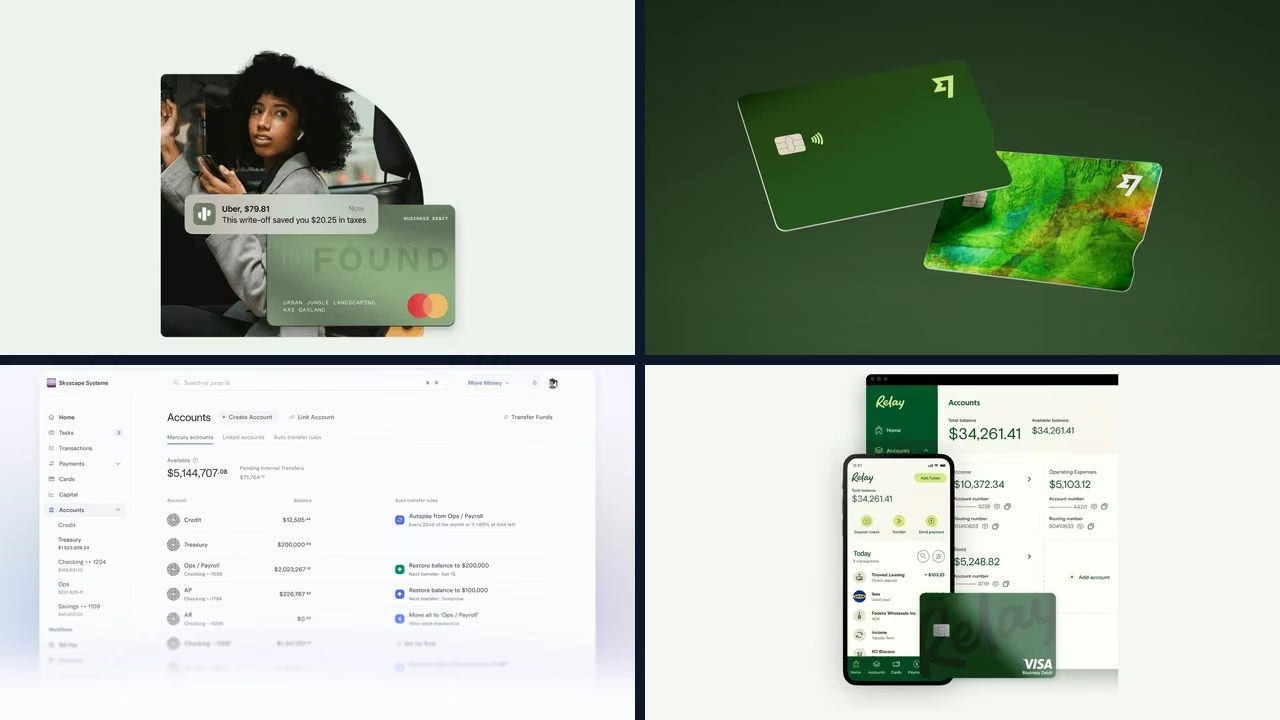
Business Credit Cards for an LLC With an EIN: Forming an LLC and getting a free Employer Identification Number (EIN) from IRS.gov separates legal business identity and opens wholesale vendor accounts—but with major banks (Chase, Amex, Capital One), an EIN alone does not bypass your personal credit check. Those banks ask for both your LLC EIN and your personal SSN to establish a personal guarantee. Only specialized corporate cards like Brex (plus peer fintechs such as Ramp or Mercury) underwrite purely on an EIN without a personal credit check, and they require incorporated status plus substantial verified bank cash ($50,000+ or high ongoing sales).
New Small Business Credit Cards & Startup Cards With No Credit: You do not need years of corporate tax returns to apply. Sole proprietors and brand-new LLCs routinely get approved on Chase Ink Business Unlimited or Amex Blue Business cards using personal credit history plus estimated annual revenue and total household income (which demonstrates ability to repay if startup cash flows start slowly). If you lack both VC cash reserves and prime personal credit, start on Capital One Spark Classic or a deposit-backed secured business card for 6 to 12 months while building commercial trade lines.
Four Practical Approval Habits Shared by Veteran Founders: First, check soft-pull pre-qualification tools before triggering hard personal inquiries. Second, prepare your exact NAICS/industry code, business formation date, EIN (or SSN as sole proprietor), and conservative revenue projection beforehand so automated underwriting stays consistent. Third, space applications at least 90 days apart—stacking three applications in one week signals acute cash distress to bank risk models. Fourth, link business credit card feeds directly into accounting software (such as Wave or QuickBooks) so tax-deductible software, travel, and supply expenses stay cleanly separated from personal spending.
- EIN + SSN reality: traditional bank business cards almost always check personal credit even when applying under an LLC EIN.
- Sole proprietors qualify Day 1: use your legal name and SSN on applications while keeping business charges isolated from personal buys.
- Fair/bad credit upgrade ladder: spend 6–12 months paying Spark Classic or secured cards in full before applying for Ink or Amex.
- Space out applications: limit new card applications to one every 3+ months to keep personal credit inquiries healthy.
Keep exploring Percentio
Browse the full directory to find related calculators and compare the assumptions that matter to your situation.
Browse all financial calculators →Related Blogs



Questions and answers
Practical answers to common planning questions.