Practical guides, fresh perspectives, and remarkable stories from the world of money. Explore personal finance, business, property, and the lifestyles wealth makes possible.
A Registered Retirement Income Fund, or RRIF, is the account many Canadians use to turn retirement savings into retirement income. It usually receives money from an RRSP, keeps eligible investments inside a registered plan, and requires a minimum withdrawal each year after it is established.
The best RRSP investment is not one universal ETF, stock, or fund. It is a diversified portfolio you understand and can hold through changing markets, built around your retirement timeline, contribution room, costs, and comfort with risk.
How much you should save for retirement in your 20s and 30s depends on your income, debt, essential costs, employer match, and retirement goal. The practical move is to begin with a contribution you can repeat, capture available employer money, protect your cash flow, and increase savings as your life and income change.
The best way to save for retirement when you are self-employed is to make retirement a business cash-flow system, not an occasional leftover. Separate taxes and operating cash first, choose a plan that fits your business and team, then contribute from profitable periods on a schedule you can maintain.
You can build retirement savings without a 401(k) by combining accounts you control with a realistic income-and-expense plan. Start with your Social Security estimate and monthly essentials, then automate an IRA contribution you can sustain and increase it as your cash flow improves.
The best way to save for retirement is to start with a plan you can repeat: know your baseline, protect your cash flow, capture any employer match, and raise automatic contributions over time. Starting at 40 is not a verdict on your future; it is a reason to make the next contribution deliberate.
Tax lien investing can offer interest income when a property owner redeems delinquent taxes, but it is not a shortcut to buying real estate. The rules, costs, priority, and possible foreclosure path are local, so careful research matters more than a headline rate.
A taxpayer identification number, or TIN, is the IRS category for numbers used in tax administration. For a small business owner, the key is knowing whether an EIN, SSN, ITIN, or separate state tax account applies to the person, the business entity, and the task at hand.
To get a federal tax ID number for a small business, apply for an Employer Identification Number (EIN) directly through the IRS. Eligible online applicants can receive it immediately after approval, and the IRS application costs $0.
The best tax software depends on the forms you need, whether you want professional help, and the total cost after state filing and optional services. This comparison separates each provider’s strengths from the limits to check before you start.
To calculate sales tax, multiply the taxable price by the combined rate for the transaction, then add the tax to the price. The tricky part is choosing the right taxable amount and location-based rate. This guide walks through both, using a backpack example and simple checks you can repeat on any receipt.
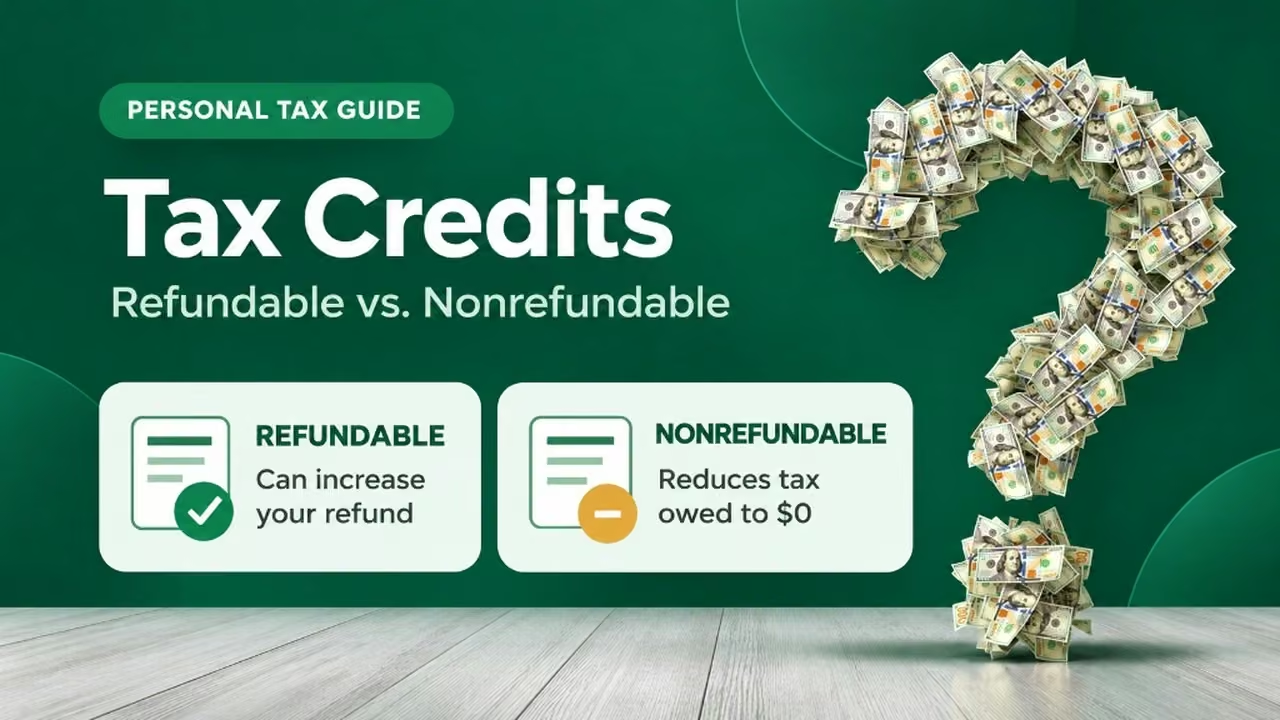
Tax credits can lower your federal tax bill dollar for dollar, but not every credit works the same way. The key difference is whether unused credit can still be paid to you after your tax reaches zero.
If you sell stock at a loss and buy the same or substantially identical securities within 30 days before or after the sale, U.S. tax rules generally disallow the loss on the matched shares. For a taxable-account replacement, that loss usually increases your cost basis. A purchase inside an IRA or Roth IRA works differently.
Most U.S. long-term capital gains are taxed federally at 0%, 15%, or 20%. Your taxable income and filing status determine which rates apply, and a single sale can span more than one rate. Start by calculating your gain and checking how long you held the asset.
To find the sales tax rate on a receipt, divide the tax charged by the taxable subtotal before tax and multiply by 100. If the receipt shows $5.12 in tax on $64 of taxable items, the rate is 8%.
Nine states have no broad income tax on wages in 2027: Alaska, Florida, Nevada, New Hampshire, South Dakota, Tennessee, Texas, Washington, and Wyoming. See how much of a $75,000 salary you could keep and what to check before a move, from payroll premiums to taxes on out-of-state work.
A real estate agent helps clients with property transactions. A broker holds a state license with broader authority, and Realtor identifies a member of the National Association of Realtors. One person can hold more than one of these titles. What matters for your move is who represents you, who does the work, and what you agree to pay.
A fixer-upper can cost less to buy and give you more say in how your first home looks. It can also demand more cash early and take up months of evenings or weekends. Compare the tradeoffs with a move-in-ready home before deciding which purchase fits your budget and your life.
To buy a fixer-upper without overpaying, set an all-in budget, inspect the house, and get written repair calculations before you finalize your offer. This guide walks through those steps, including financing options and seven warning signs that can turn a bargain into a money pit.
Good multifamily property management starts with tracking rent, vacancies, repairs, and upcoming renewals unit by unit. Use this U.S. owner’s guide to set up those routines, compare management fees, and decide whether to manage the building yourself or hire help.
If you plan to live in one unit, you may be able to buy a duplex, triplex, or fourplex with a low down payment. Compare FHA, VA, and conventional options first. Then check the cash needed to close and whether your budget can handle a vacancy or major repair.
From deep-blue boron diamonds and vivid crimson musgravites to celestial jadeites, explore the 10 rarest and most expensive gemstones in the world, ranked from $10,000 to over $3.9 million per carat.
Start with two or three agents who work in your ZIP code and have handled homes like yours. This guide compares 12 U.S. residential brokerage brands and regional firms by what they may be useful for, from online search and fee comparisons to luxury marketing and moves across town.
Before hiring a listing agent, look for evidence that they can price your home, handle buyer inquiries, and explain your choices. These five warning signs give U.S. home sellers questions to ask and examples of what to look for in the answers.