Practical guides, fresh perspectives, and remarkable stories from the world of money. Explore personal finance, business, property, and the lifestyles wealth makes possible.
A modern supermarket can sell everyday essentials like milk, eggs, and bread at razor-thin margins or outright losses and still generate billions in enterprise revenue. With average food retail net profit margins hovering at just 1% to 2%, here is the hidden business model supermarkets use to turn volume, aisle psychology, trade spend, and customer baskets into massive corporate profits.
Before expanding payroll into bloated overhead, discover the essential five-person startup architecture that allowed modern disruptors to outmaneuver entrenched industry giants, protect cash runway, and engineer sustainable, scalable profitability.
Discover verified median net worth, low thresholds, and top 10% wealth benchmarks across every age bracket, helping you benchmark your financial progress from your first paycheck into retirement.
Viral videos across TikTok, X, and YouTube claim that a nationwide electrical and banking blackout will hit the United States on November 17. The rumors have sparked widespread anxiety about frozen ATMs, disrupted credit card networks, and whether families should rush to withdraw physical cash. Here is the verified reality behind the scheduled FEMA emergency test, the technological architecture that keeps American banks operational, and the exact mathematical formula for how much cash you should realistically keep at home without losing thousands to the "mattress tax."
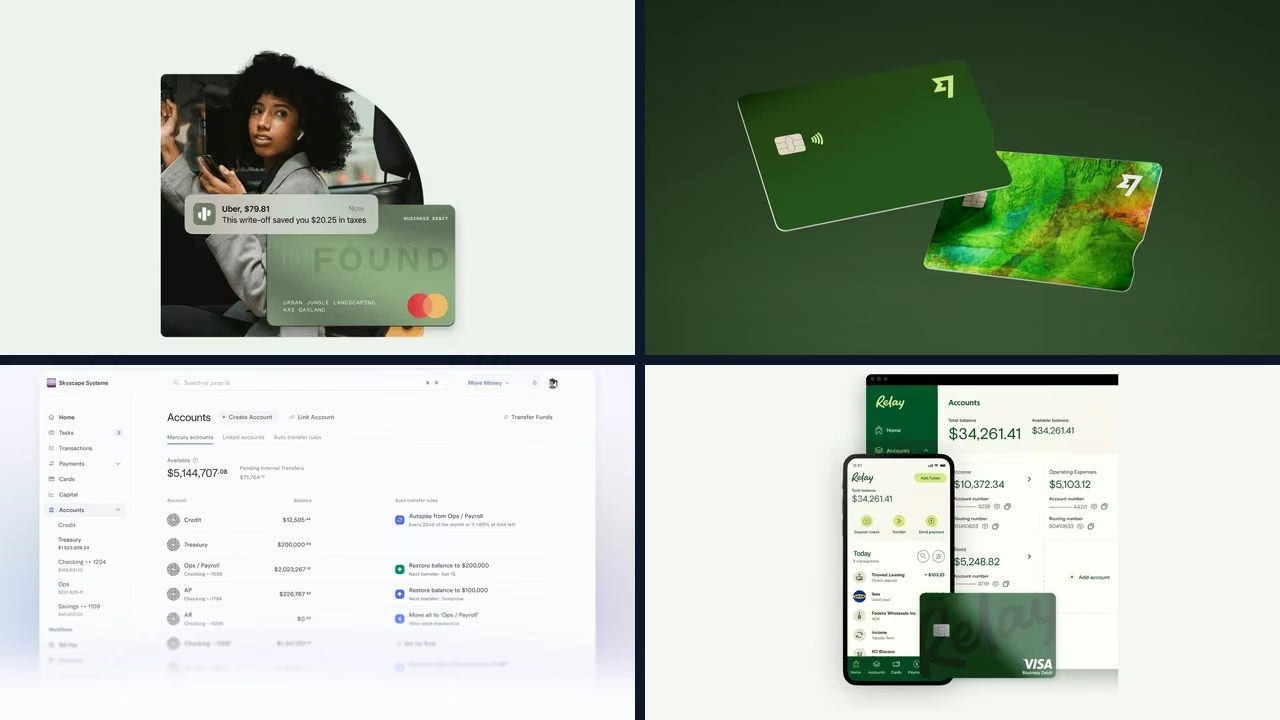
Here is a fundamental question for every independent worker: when a client pays you, where does that money land? If the answer is your personal checking account, you are making tax time, expense tracking, and long-term budgeting significantly harder than they need to be. According to economic data from MBO Partners, a record 74.9 million Americans earn independent income. In IRS Publication 583 ("Starting a Business and Keeping Records"), the tax authority strongly advises opening a dedicated business checking account to clearly segregate personal and commercial transactions. Today, modern financial technology has eliminated monthly maintenance fees, minimum balance requirements, and tedious paperwork. We compare the top 5 business bank accounts designed specifically for freelancers, evaluating fees, tax automation tools, checking interest rates, and underlying FDIC deposit safety.
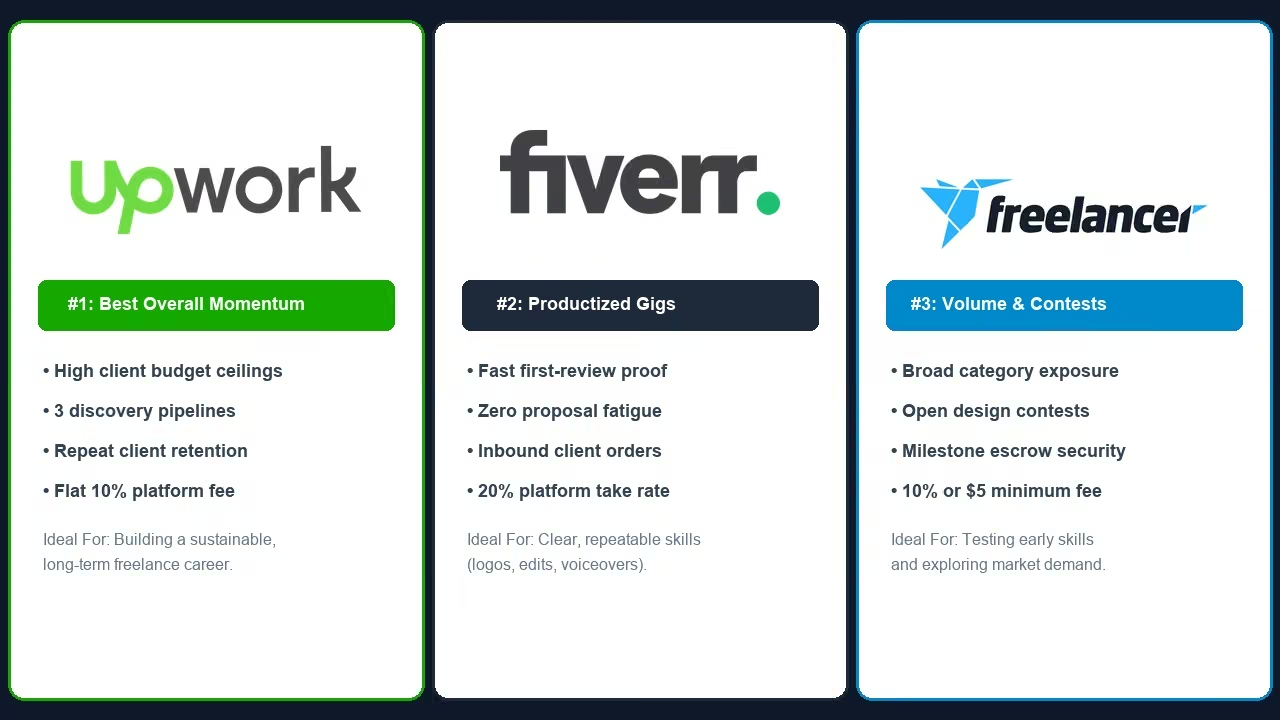
Most beginners mistakenly believe the best freelance website is simply the one with the highest sheer volume of job listings. That intuition sounds logical, but in practice, it almost always leads to the exact same painful trap: overwhelming global competition, weak personal positioning, proposal burnout, and no clear roadmap to earning that critical first paid review that convinces skeptical clients to trust you. The smarter question is not where the most jobs exist—it is where an unvetted beginner can actually get noticed without being invisible. The platform you choose does not just dictate where you look for work; it fundamentally shapes how you are forced to sell yourself. We compare the three premier beginner-friendly freelance marketplaces—Freelancer.com, Fiverr, and Upwork—analyzing client discovery pipelines, take-rate economics, escrow security, and how to choose the right training ground for your specific freelance skillset.
Right now across the global digital economy, there is a striking labor market paradox: corporate employers are desperate for remote workers, yet the average online job listing sits completely vacant for more than two months before an offer is finally accepted. The reason is not a lack of willing applicants—it is a massive keyword disconnect. Job seekers repeatedly flood generic search terms like "data entry clerk" or "remote customer service," completely bypassing high-paying specialized roles that require zero college degrees, zero formal technical backgrounds, and zero previous corporate experience. We cover seven legit online jobs desperate for workers right now. We analyze verifiable compensation rates, provide honest opportunity scores, reveal what skills actually matter, and show you the exact keywords and qualification tests needed to land your first remote contract.
Ask ten business owners why they haven't hired a virtual assistant yet, and you will hear ten familiar refrains: 'All the good ones are taken,' 'I don't have time to train anyone,' or 'I don't know where to start looking.' But probe beneath the surface, and the actual hesitation is universal: 'What if I hand this person my calendar, my inbox, and my client relationships—and they fail?' Wanting help is easy; being certain about a remote stranger you will never physically meet is hard. Drawing on proven hiring frameworks from over 10,000 executive and operational placements, this guide covers hiring, screening, and onboarding a virtual assistant. Trust is not an emotional feeling formed in an interview; it is an objective system built into your screening pipeline before you ever extend an offer.
Traditional freelance job boards are flooded with AI spam. Discover how high-earning freelance writers land premium remote writing work through 8 proven channels, cold pitch scripts, and value-based pricing.
Breaking into freelance writing feels impossible when every job ad demands an established portfolio and years of clips. Discover 12 proven, zero-experience strategies to land your first paid writing clients from complete scratch.
Working from home as a freelance writer promises unmatched flexibility, but without the artificial structure of an office, it quickly leads to procrastination, endless workdays, and creative exhaustion. Here are 12 battle-tested productivity strategies to help you write faster, protect your mental clarity, and maintain healthy boundaries.
Running an independent business or freelance practice often means wearing every hat simultaneously—from marketing director and project manager to invoice collector. The right software stack eliminates repetitive busywork and automates client workflows. Here are 14 of the best apps for small businesses, freelancers, and solopreneurs to streamline operations, save hours every week, and boost profitability.
Every dollar you earn faces a silent, relentless adversary: inflation. Leaving your hard-earned savings in a traditional zero-interest checking account guarantees a steady loss of purchasing power year after year. Investing is the only proven mathematical engine that converts active labor into passive, compounding wealth. However, the modern financial landscape is crowded with competing choices—ranging from bulletproof government-backed cash yields to volatile high-growth tech equities and leveraged physical properties. The secret to long-term financial success is matching each investment vehicle to your risk tolerance, time horizon, and starting capital. In this comprehensive, data-backed guide, we analyze eight ways to invest your money, breaking down exact risk ratings, verified historical returns, and the minimum capital required to get started.
From Manhattan's Billionaires' Row penthouses to sprawling Palm Beach compounds and Malibu oceanfront estates, explore the 10 most expensive homes in American history ranked from $141 million to $238 million.
From Savile Row pure hand-stitching and rare vicuña fabrics to diamond-encrusted showpieces, discover the 10 most expensive suits in the world ranked from $28,000 to over $890,000.
A lower mortgage interest rate does not automatically mean a refinance will save you money. Closing costs—such as origination fees, appraisal fees, title insurance, and prepaid points—must be recovered before you move or sell. Worse, stretching a partially paid 30-year mortgage back into a brand-new 30-year schedule can cut your monthly cash outflow while actually raising total lifetime interest.
Simple interest grows only on your original deposit, while compound interest pays returns on both your principal and previously earned interest. Knowing how compounding frequency converts a stated nominal rate (APR) into an effective annual yield (APY) prevents mistakes when comparing savings accounts, certificates of deposit, and loans.
One of the costliest myths in personal finance is believing a pay raise that pushes you into a higher tax bracket causes all of your earlier income to be taxed at that higher rate. In a progressive bracket system, only dollars inside the top tier pay the marginal rate—while your true effective tax rate across all income stays significantly lower.
Home equity is often a homeowner’s single largest financial asset, yet calculating how much you can actually access is widely misunderstood. Knowing your equity determines whether you can eliminate PMI, qualify for a home equity loan, or tap cash for renovations.
Discover how mortgage amortization schedules allocate every dollar between principal reduction and lender interest, and see how small extra payments can save tens of thousands in lifetime interest.
Compare the debt snowball and debt avalanche payoff methods to determine whether psychological quick wins or mathematically optimized interest savings will eliminate your balances faster.
Paying only the minimum on your credit card is designed to maximize lender profits while keeping you trapped in decades of compound interest. Learn how minimum payments are calculated and how to break free.
When you carry balances on three, four, or five cards, sending equal payments or paying minimums guarantees maximum interest costs. Here is an exact 3-card, $7,500 worked comparison showing how the debt avalanche method saves thousands of dollars and cuts years off repayment.
On the same $400,000 home, a smaller mortgage payment can mean either borrowing less or staying in debt longer. Those are very different decisions. Here is a three-scenario comparison you can reproduce before testing your own numbers.